
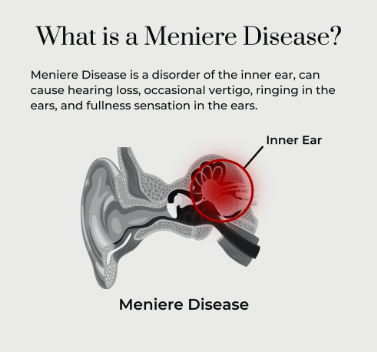
Meniere’s disease is a chronic inner ear disorder that causes spontaneous recurrent vertigo, fluctuation, hearing loss, tinnitus, and a feeling of fullness in the inner ear. It is caused by abnormal buildup of fluid in the inner ear. Symptoms typically only affect one ear. Meniere’s disease is generally not inherited but it does have a specific genetic component with 5-15% of cases reporting a family history of the disorder. While most cases are sporadic, families with affected members often show an autosomal dominant pattern of inheritance suggesting a genetic predisposition frequently involving mutations in genes related to inner ear structure.
Meniere’s disease is not contagious. This disease is not fatal either. It’s a chronic non lethal condition of the inner ear while there is no cure. Over 85% of patients experience improved quality of life through lifestyle adjustments. Treatment focuses on managing symptoms and reducing the frequency of vertigo attacks rather than curing the disease. Symptoms of this disease can go into remission for months or years but often return. This disease is caused by abnormal fluid buildup in the ear known as endolymphatic hydrops which disrupts balance in the hearing signals. While the exact cause of this fluid accumulation is unknown it is likely triggered by factors like poor fluid drainage, viral infections, autoimmune responses, genetics, or head trauma.


