
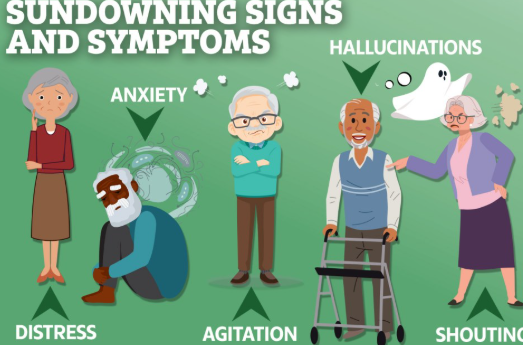
Sundowning is a phenomenon, often linked to Alzheimer’s or dementia, characterized by increased confusion, anxiety, agitation, and restlessness occurring in the late afternoon, evening or nighttime. It is not a disease itself but a set of symptoms, including pacing, wandering, and mood swings usually caused by fatigue, fading lights, shadows, or disrupted by body clocks. A person with dementia becomes agitated demanding to come home or to go see a deceased relative at dusk.
Sundowning does not only happen with dementia, although it’s most common in those patients. It can occur in older adults without dementia due to cognitive decline, exhaustion, pain, medication side effects, or infections like uti’s. It is sometimes called delirium or general evening confusion in these cases. Underlying issues such as sleep disorders, depression, kidney/liver dysfunction, or sensory deprivation can trigger similar symptoms. Seniors even without dementia can experience sundowning like confusion and agitation after surgery.
Sundowning itself is not directly fatal. It is a symptom cluster not a disease involving increased agitation, confusion, and restlessness in dementia patients during late afternoon or evening. While not fatal, severe sundowning can lead to injuries from wandering, increase caregiver burnout or signal accelerated cognitive decline. Behaviors include agitation, confusion, pacing, yelling, or hallucinations, which typically peak around sunset.


