
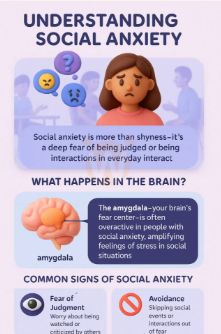
Social anxiety disorder or social phobia is a mental health condition characterized by an intense, persistent, fear of being watched, judged, or humiliated by others in social or performance situations. It goes beyond shyness, often causing debilitating distress and avoidance of daily activities like speaking to strangers, eating in public, or attending work and school. Common triggers for this are meeting new people, public speaking, dating, and being in public places.
Social anxiety is partially genetic, with studies suggesting inherited factors account for 27% to over 50% of the risk. While it runs in families it is not solely dedicated to DNA it develops through a combination of genetic predispositions and environmental triggers like bullying or trauma. This disorder is very common affecting approximately 12% of u.s. Adults at some point in their lives with around 7% experiencing it in any given year. It is the fourth most common mental health condition. It impacts about 1 in 10 teens and adults often starting around age 13.
Social anxiety disorder is not directly fatal but it is a serious mental health condition that can become dangerous is left untreated as it increases the risk of suicide, depression, and substance abuse. Severe, chronic social anxiety can lead to extreme isolation, reduced quality of life and physical health problems like cardiovascular issues.


