
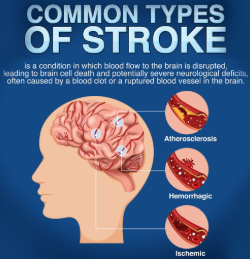
A stroke or “brain attack” is a medical emergency that occurs when blood flow to part of the brain is interrupted, either by a blockage or a burst blood vessel causing brain cells to die. This lack of oxygen causes rapid brain damage demanding immediate emergency care to minimize long term disability or death. Strokes require immediate medical attention and could cause extreme permanent brain damage.
High blood pressure is the leading cause of stroke, accounting for most cases by damaging blood vessels. Key risk factors include smoking, high cholesterol, diabetes, obesity, physical inactivity, and atrial fibrillation. Prevention focuses on managing these conditions through diet, exercise, and lifestyle changes.
Stokes in humans are generally classified into three main types based on their cause: ischemic (blockage), hemorrhage (bleeding), and transient ischemic attack (mini-stroke). Ischemic strokes are the most common (87%), while hemorrhagic strokes are rarer but often more severe, caused by ruptured blood vessels. Immediate medical attention is critical for all stroke types to minimize brain damage.
While there is no single “cure” that reverses a stroke instantly, immediate emergency treatment can minimize brain damage and, in some cases, lead to a full recovery. Treatments must start within 3-4.5 hours for best results including clot-busting drugs, endovascular thrombectory to remove clots and surgery for brain bleeds.
The majority of strokes occur in aged people sixty five or older, with the risk doubling every decade after 55. While senior adults are most at risk, strokes can happen at any age and incidence is rising among younger adults with nearly 10-15% of strokes now occurring in people under 45-50.


